Used Isobaric PET Complete Bottling Line for Water CSD 18000 bph 2L
Technical Specifications & Performance Data Year 2000 PET line with
isobaric volumetric filling for 2.0 L at up to 18,000 bottles/hour.
Built around Krones and Simonazzi equipment, it processes still water,
sparkling water, and carbonated soft drinks with precise fill control
and stable throughput. In 2.0 L PET service, it also functions as a
CSD bottling machine within a fully integrated layout. Line type: Used
isobaric PET complete bottling line (second hand) Nominal speed: up to
18,000 bottles/hour (2.0 L PET) Bottle formats: 2.0 L Container type:
PET (air-conveyed handling) Product range: Water (still and
sparkling), CSD Fill technology: Volumetric isobaric
rinsing/filling/capping monoblock with downstream labeling and
end-of-line packaging Line composition: Approx. 14 integrated machines
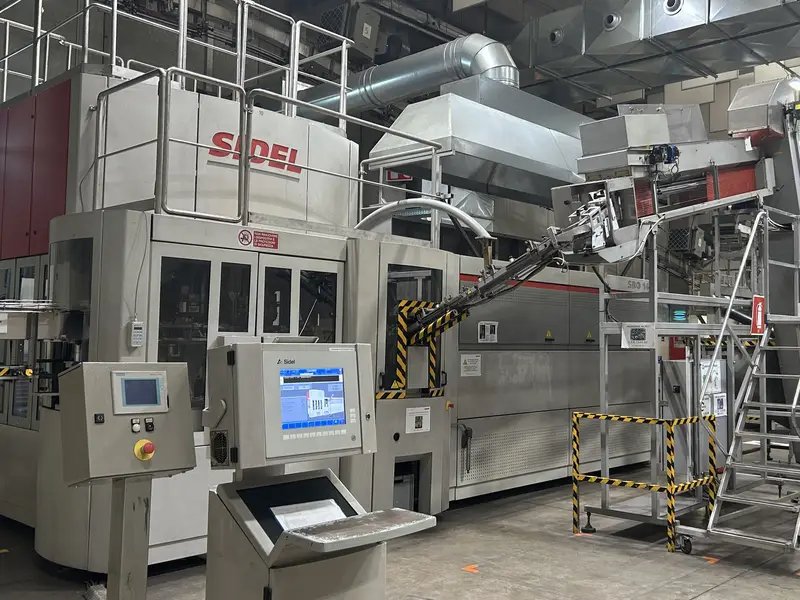
including blow molder, air conveyors, rinser/filler/capper monoblock,
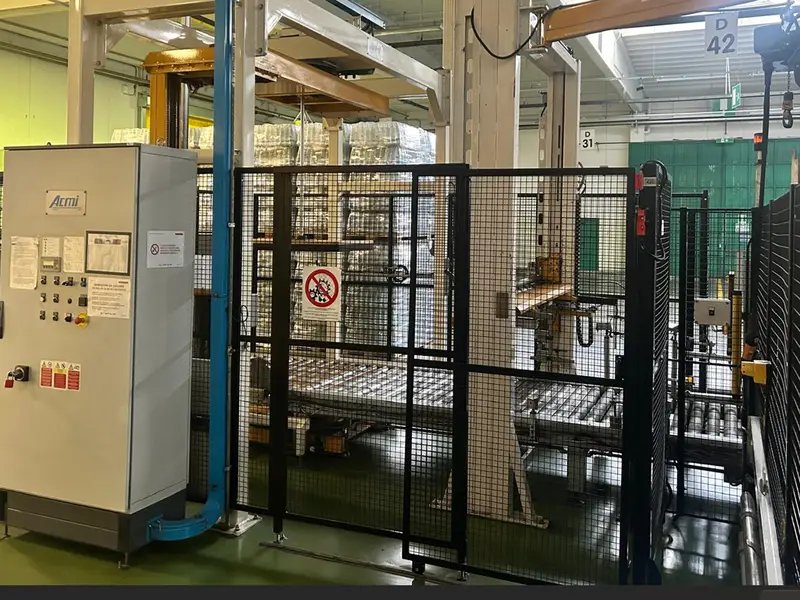
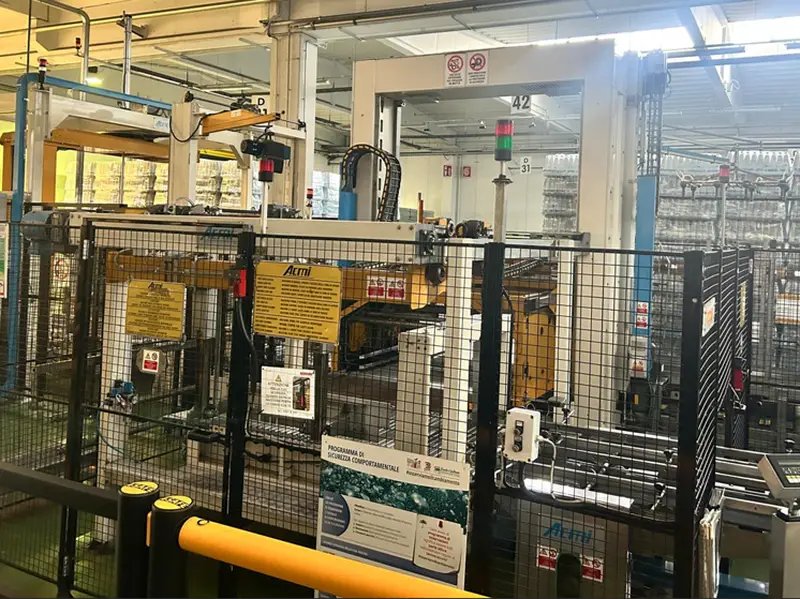
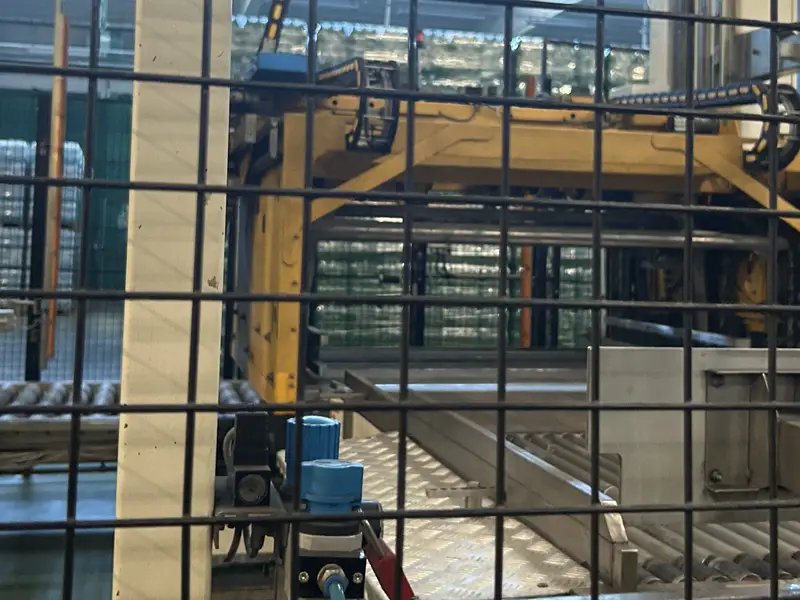
labeler, shrink/tray packer, palletizer, stretch wrapper, inspection
and coding modules Main manufacturers: Krones, Simonazzi Years: Main
line 2000; blow molder 1999 Condition: Ready for operation; safety
features included Advanced Automation & Control Systems Central
PLC/HMI coordinates blow molding, rinsing, isobaric filling, capping,
labeling, and end-of-line. Recipe management and synchronized
conveyors with VFD drives keep flow stable at speed. Accumulation and
reject handling limit stoppages and waste. Automation level: Fully
integrated, recipe-based operation Operator interface: HMI with
alarms, diagnostics, and basic production reporting Electrical:
Industrial 3-phase supply (typical 400–460 V, 50/60 Hz; to be
confirmed on inspection) Safety: Interlocked guards, emergency stop
network, and category-rated safety circuits Production Line
Integration Capabilities Interfaces upstream with preform handling and
syrup room/premix and downstream with packaging and logistics. Modular
conveyors, inspection, and coding modules support streamlined plant
integration and future expansion. Compatible with standard beverage
utilities (CIP, CO₂, chilled water) Interfaces for inspection,
laser/inkjet coding, and vision verification Conveyor modules
adaptable to existing layouts Machine Condition & Maintenance History
In ready-for-operation condition with safety protections installed.
Maintained in production and assessed for functional performance.
Maintenance records, documentation, and layout drawings available for
review during a technical visit. Operational Performance & Versatility
Isobaric technology delivers accurate volumetric filling for
carbonated and non-carbonated beverages, with controlled foam and
consistent fill heights. Air-conveyed PET handling and synchronized
transfers reduce scuffing at high speed. The monoblock is the central
bottling station dedicated to 2.0 L PET. As a CSD bottling machine, it
maintains carbonation and fill accuracy at throughput. Primary
applications: still and sparkling water, carbonated soft drinks
Rinsing, isobaric filling, capping, and labeling engineered for
high-speed PET End-of-line configured for shrink or tray-based
packaging and palletizing Installation Requirements & Site Preparation
Plan straight air-conveyor runs, accumulation zones, and service
access around the monoblock and end-of-line. Provide a detailed floor
plan and utility matrix before installation. Utilities (typical):
Electrical 3-ph; compressed air and high-pressure air for blow
molding; process CO₂; chilled water/glycol for blow molder and
premix; potable process water; CIP supply/return; hygienic drains
Environment: Clean, temperature-controlled bottling area with
food-grade surfaces Integration: Network connectivity for production
data, coders, and inspection systems Safety Standards & Compliance
Certification Fixed and interlocked guarding, emergency stops, and
validated safety logic protect operators during rinsing, filling,
capping, labeling, and palletizing. Product-contact parts use
food-grade materials with hygienic design supporting CIP and
sanitation protocols. Mechanical guards, light curtains where
applicable, and lockout/tagout provisions Hygienic design for beverage
production and cleaning-in-place Aligned with contemporary industrial
safety practices and risk assessment




 Itália