Used STORK glass line for spirits 12000 BPH - shaped, taperedTechnical
Specifications & Performance DataThis complete used bottling line for
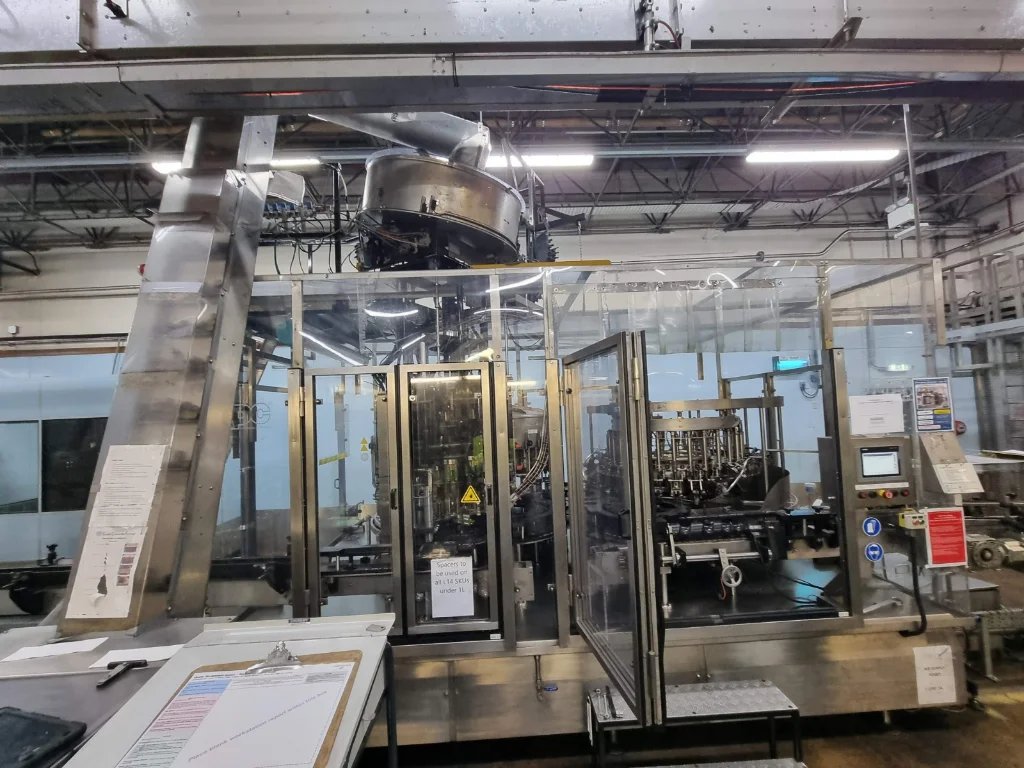
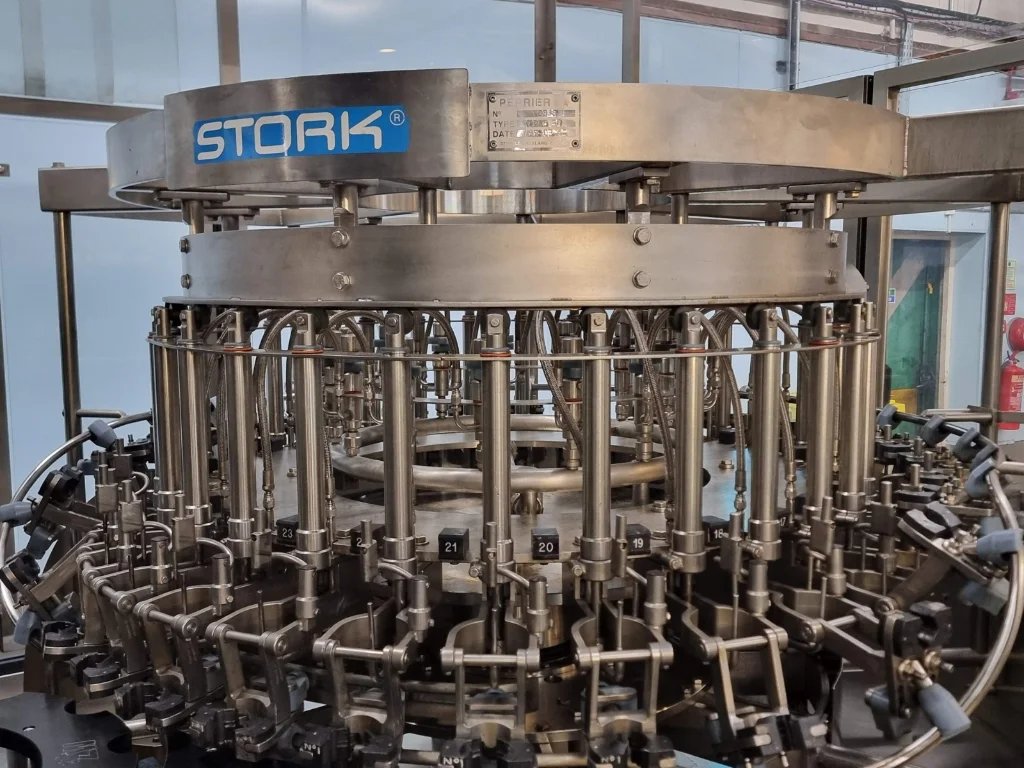
glass bottles is engineered around a Stork
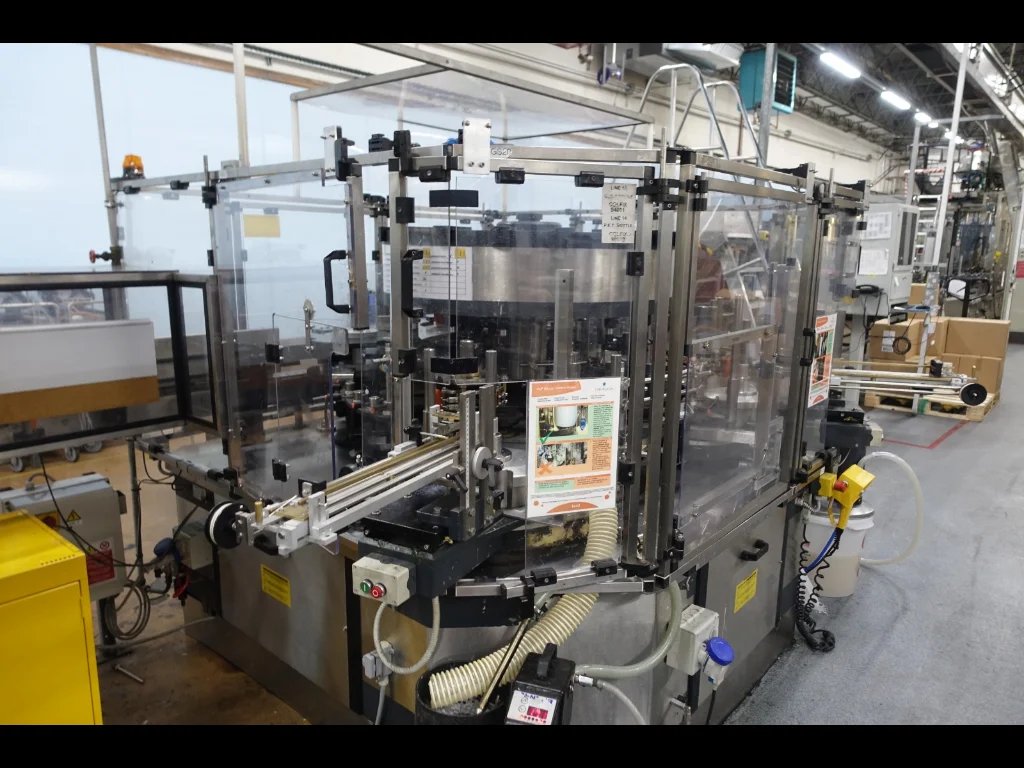
rinserâfillerâcapper monoblock with vacuum filling,
complemented by wet-glue front, back, and neck labeling. It is a
second hand industrial packaging solution designed for efficient
beverage production on round, shaped, and tapered glass
containers.Line type: Complete glass bottling lineProduction speed:
200 BPM (approximately 12,000 bottles per hour)Bottle shapes: Round,
shaped, taperedFormats: Compatible with 0.35L, 0.7L, 0.75L, 1.14L
bottle formatsContainers: Designed for Glass bottle handlingFilling
principle: Vacuum fillingLabeling: Wet glue labeller for front, back,
and neck labelsElectrical supply: 415 V / 50 Hz on most equipment;
select components 240 V / 50 HzKey equipment and model
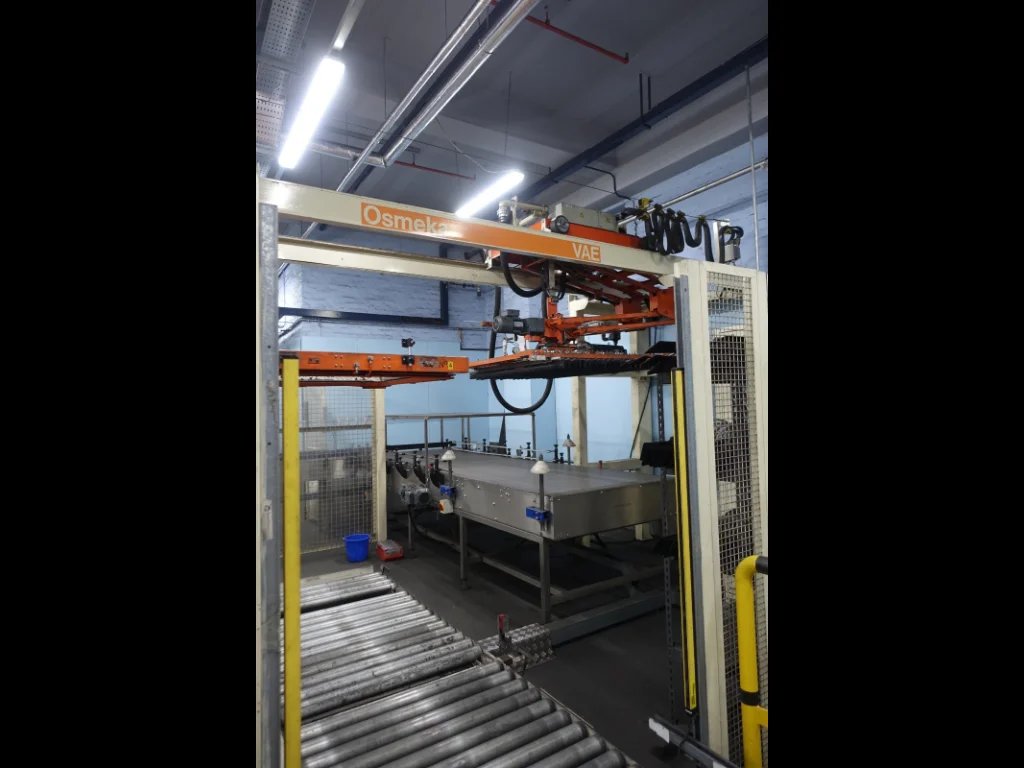
references:Depalletizer: Osmeka VAE (1996)Rinser-Filler-Capper
Monoblock: Stork RVR30/146-36-9 LW (1996)Labeller: Cavagnino & Gatti
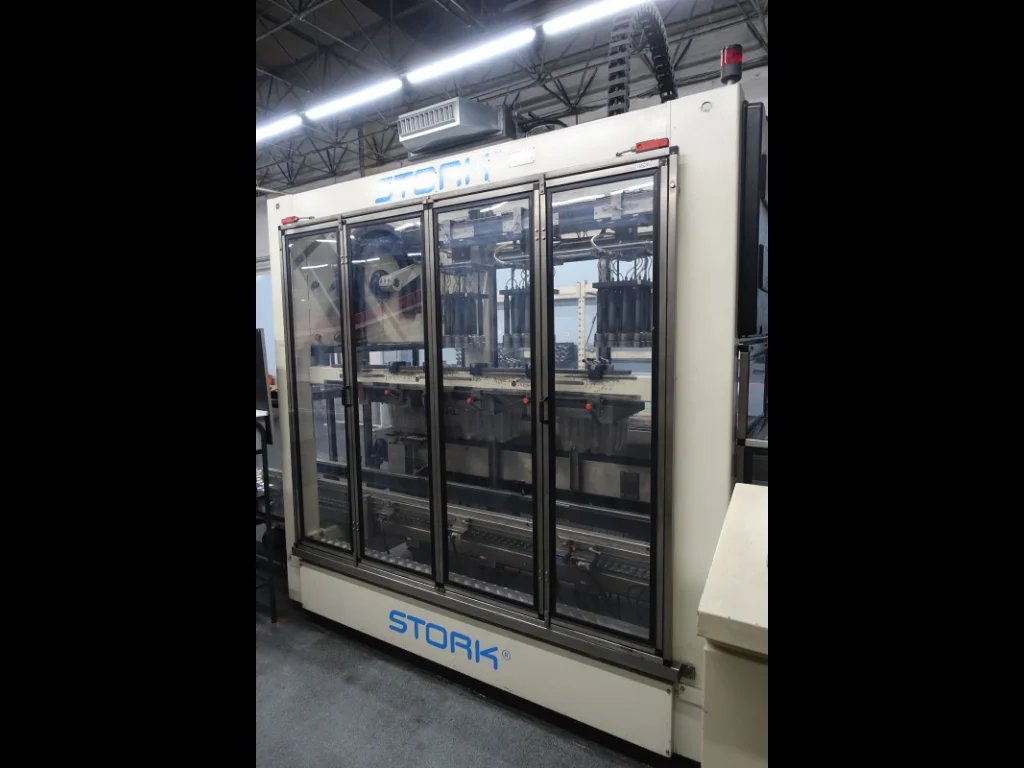
CG84CL3/18 (wet glue)Laner: Stork SIE1500PB3 (1996)Case packer: Stork
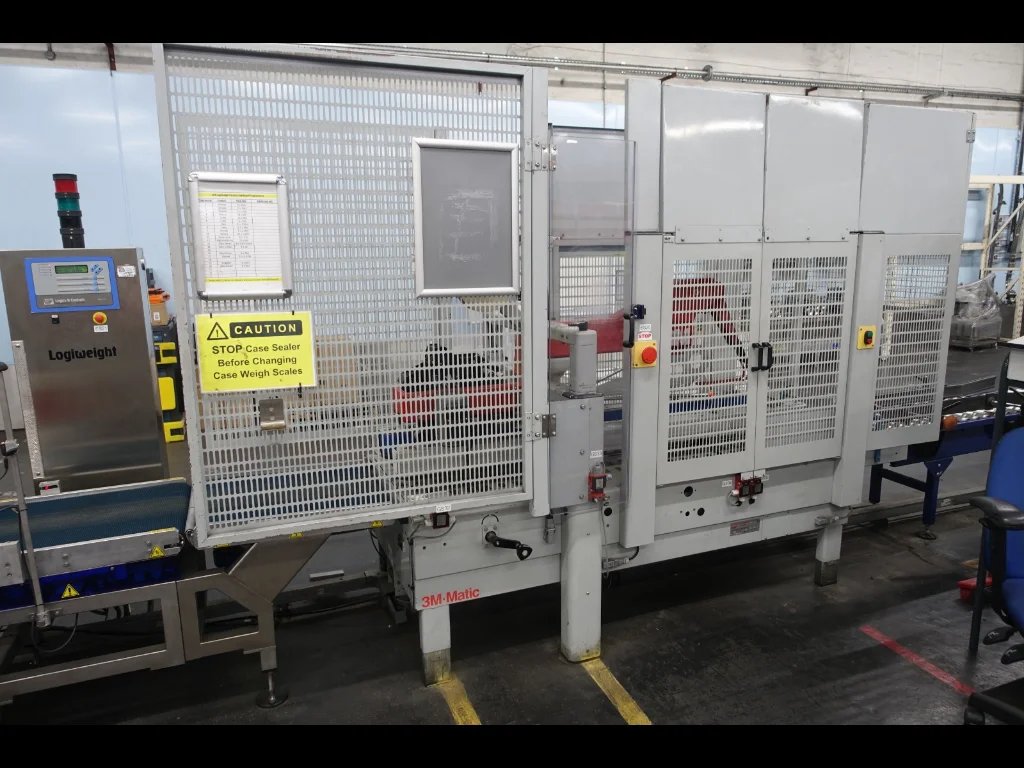
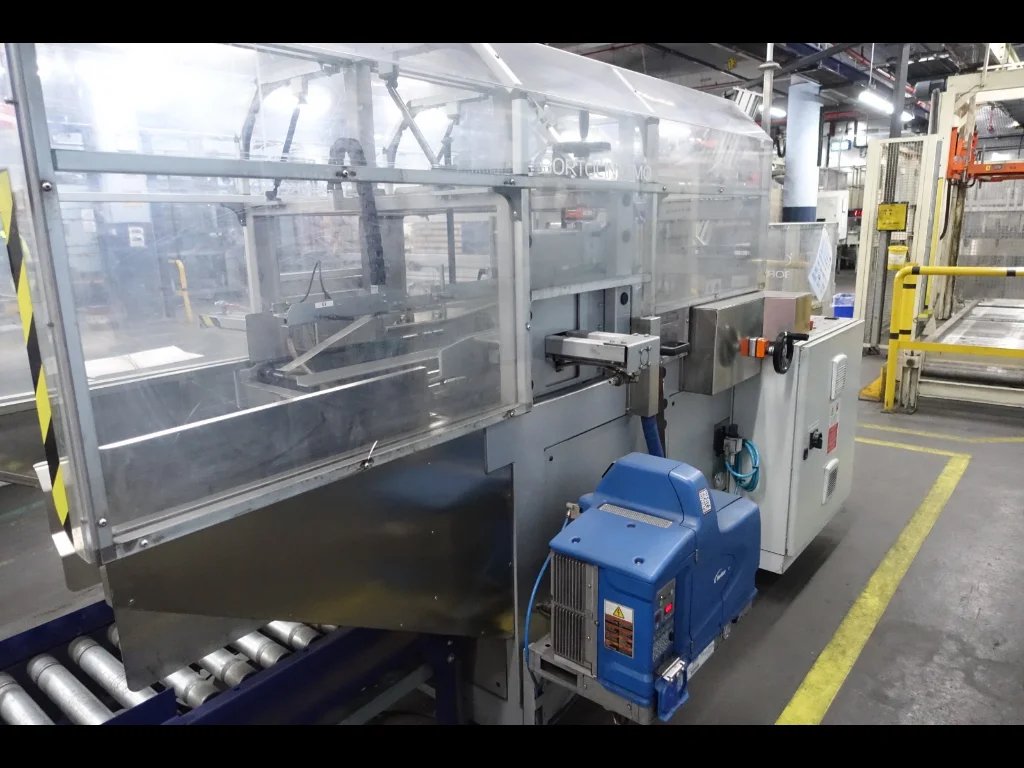
(1996)Case sealer: 3M 800 Afe (1998)Carton erector: Bortolinkemo with
Nordson hot glue applicator (2013)Checkweigher: Logics & Control
Logiweight LS (2016)Spiral carton elevators: AmbaFlex SpiralVeyor SV
(2022 and 2013)Advanced Automation & Control SystemsThe line
integrates automated bottle handling, synchronized conveying, and
coordinated controls across depalletizing, rinsing, filling, capping,
labeling, and end-of-line packaging. The monoblock provides precise
vacuum filling for consistent fill levels on glass containers. The
wet-glue labeling station applies front, back, and neck labels at line
speed. Ancillary equipment such as the Nordson hot melt system on the
case/carton erector and the Logiweight checkweigher support reliable,
data-driven quality and packaging integrity. Electrical configurations
are standardized at 415 V / 50 Hz for heavy equipment and 240 V / 50
Hz for the checkweigher.Production Line Integration
CapabilitiesDesigned for seamless inline operation, this used bottling
line includes a laner for flow management and spiral carton elevators
for vertical transport, optimizing footprint and maintaining
throughput. Format changeovers cover 0.35L to 1.14L glass bottles,
handling round, shaped, and tapered geometries. The system integrates
upstream depalletizing through to case erecting, packing, sealing, and
weight inspection, providing end-to-end industrial packaging
capability for beverage production.Machine Condition & Maintenance
HistoryThis second hand bottling equipment set comprises components
manufactured between 1996 and 2022, reflecting a maintained and
progressively updated line. It is presented as a complete used
bottling line suitable for recommissioning into beverage production.
Component ages vary, with the core Stork monoblock originating in 1996
and end-of-line elements including more recent upgrades.Operational
Performance & VersatilityThe vacuum filling monoblock ensures gentle
product handling and controlled fill accuracy for still products
typically bottled in glass. The wet-glue labeling machine delivers
high-quality label application on complex bottle shapes, including
neck labels. Quality control is supported by an in-line checkweigher.
The line configuration supports efficient changeovers across the
listed glass formats, maintaining consistent performance at up to 200
BPM.Installation Requirements & Site PreparationUtilities include
three-phase 415 V / 50 Hz electrical supply for primary machines and
240 V / 50 Hz for select instruments, along with compressed air for
packaging actuators and hot-melt glue for carton/case operations.
Water supply is required for rinsing and filler utility circuits.
Adequate linear and vertical space is needed to accommodate conveyors,
laner, depalletizer, monoblock, labeller, and spiral elevators.
Standard industrial flooring and access for maintenance are
recommended.Safety Standards & Compliance CertificationThe equipment
set is configured with standard industrial safety features such as
machine guarding and emergency stop circuits. Food and
beverage-compatible construction is applied on product-contact
components within the monoblock. Safety interlocks and guarding on
depalletizing, labeling, and end-of-line packaging equipment support
operator protection and compliance with typical industrial packaging
safety practices.




 Reino Unido